Tabuk: Saudi Arabia's Northwest Adventure Frontier
Tabuk is Saudi Arabia's northwesternmost major city and the gateway to one of the most dramatically varied landscapes in the entire country. Within a 200 km radius of the city you have the Hisma desert with its extraordinary sandstone buttes rising from red dune fields, the Wadi Disah canyon system carved to depths of over 200 metres through layered sandstone, the Gulf of Aqaba coast with some of the best coral reef diving in the Red Sea, the ancient oasis of Tayma with Babylonian-era inscriptions, and the future city of NEOM being built across a wilderness of mountain and sea that borders Jordan and Egypt.
Tabuk remains largely undiscovered by international tourism, which makes it particularly compelling right now. The infrastructure is improving rapidly: new hotels, improved roads to the canyon and desert areas, and a growing network of local guides who know the remote terrain. This is the window to visit before the crowds arrive.
The climate is more temperate than central or eastern Saudi Arabia. Tabuk sits at approximately 760 metres elevation with a semi-arid climate. Summers reach 38 to 42 degrees Celsius in July and August but winters from November to February are genuinely cool at 8 to 20 degrees Celsius, with occasional frost on the higher ground. The best seasons are October through April for outdoor adventures and November through February for maximum comfort.
Wadi Disah Canyon Hike: Saudi Arabia's Most Spectacular Gorge
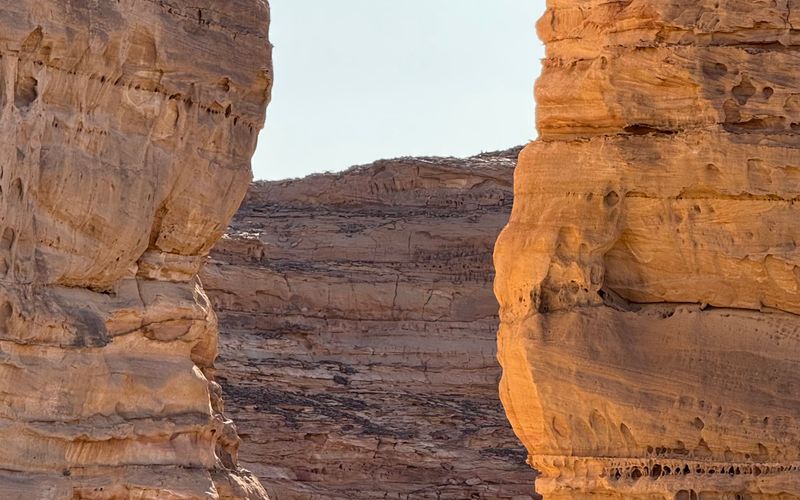
Wadi Disah is the headline natural wonder of the Tabuk region and one of the most extraordinary landscapes in Saudi Arabia. The canyon was carved over millennia by seasonal water flow through horizontal layers of Cambrian sandstone, creating a gorge system 30 to 40 km long with walls rising over 200 metres above the wadi floor. The colours shift from deep red at the canyon base to pale cream and orange at the rim, and the canyon is wide enough to contain permanent gardens of date palms, vegetable farms, and flowing springs fed by underground aquifers.
A guided Wadi Disah canyon hike from Tabuk covers the most dramatic sections of the gorge on foot, typically a 10 to 15 km route through the main canyon to the spring-fed inner section where the walls narrow and the light turns golden in the afternoon. From SAR 400 per person with 4x4 transfer from Tabuk, a packed lunch, and a guide. The hike itself is moderate difficulty on the flat wadi floor with some boulder scrambling near the spring section. Water in the springs is clean and you can drink directly from the source.
The canyon is at its most beautiful in late afternoon when the low sun strikes the east-facing walls and turns them deep amber. Plan to be at the inner canyon between 3 and 5 PM for the best photography conditions. Early morning is excellent for cooler temperatures and clear views but the light on the canyon walls is less dramatic than afternoon. Allow a full day for the complete experience: the 4x4 transfer from Tabuk takes 90 minutes each way.
Pro Tip: The inner section of Wadi Disah beyond the main farms has a series of natural rock pools fed by the spring system. Bring swimming kit in summer and spring. The water is cool, clear, and astonishing to find in the middle of a canyon in northwestern Saudi Arabia. Very few visitors know this section exists.
Hisma Desert: Sandstone Buttes and Red Dune Fields
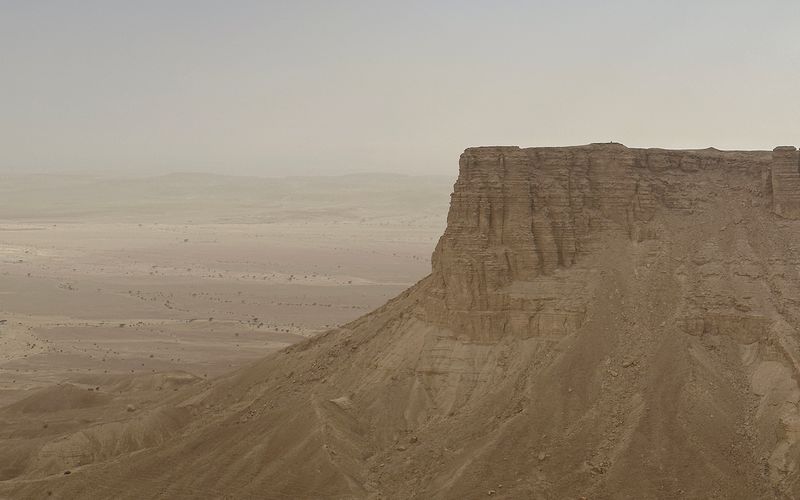
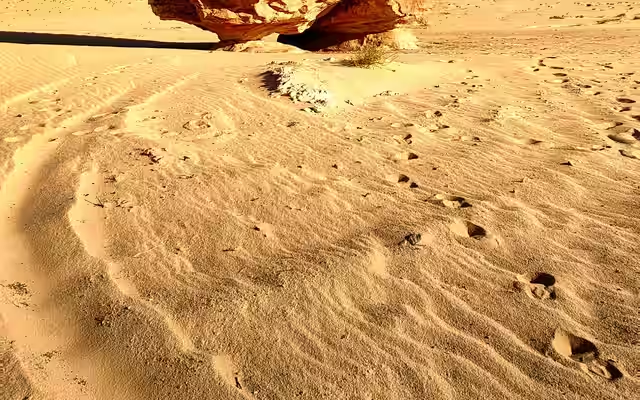
The Hisma plateau south of Tabuk is a geological theatre. Ancient sandstone formations, eroded over millions of years into isolated buttes and mushroom-shaped rocks, rise from a floor of red and orange sand dunes that shift constantly with the northwest wind. The landscape has a specific character distinct from any other desert in Saudi Arabia: it is more structured, more layered, more cinematic. The rock formations change completely depending on the light and several photographers have described the Hisma as among the most photographable landscapes in the Arabian Peninsula.
A Hisma desert tour from Tabuk is a full-day 4x4 excursion covering the main butte formations, two or three dune fields suitable for sand boarding and dune walking, and a sunset position above the desert floor with views extending 50 km in every direction. The tour includes a Bedouin-style desert lunch and camp tea at a traditional firepit. Overnight camping in the Hisma is possible and adds a stargazing dimension that the daytrip version cannot match: at 760 metres with zero light pollution, the Milky Way on a clear winter night over the sandstone formations is unforgettable.
Desert quad biking and dune buggies can be arranged in the Hisma for groups wanting active time on the dunes rather than just photography and walking. The terrain is well-suited to both activities with long dune runs and clear lines of sight for safety.
Diving and Snorkelling in the Gulf of Aqaba
The Saudi coastline along the Gulf of Aqaba north of Haql and around the Magna area contains coral reef systems that are among the most intact and biodiverse in the entire Red Sea. The combination of cooler Gulf of Aqaba water temperatures, lower boat traffic than the central Red Sea reefs near Jeddah, and excellent visibility makes this stretch one of the best dive destinations in the Middle East for those willing to reach it.
Water temperatures run from 22 degrees Celsius in January and February to 28 degrees Celsius in August and September. Visibility is typically 20 to 30 metres year-round. The reefs here have not experienced the bleaching events that affected parts of the central Red Sea in recent years and the coral cover is exceptional. Regular dive species include the distinctive triggerfish, Napoleon wrasse, sea turtles, octopus, and a full spectrum of Red Sea reef fish. Occasional hammerhead sharks are reported at the deeper outer reef sites from September to November.
A guided scuba diving day from Haql or Magna includes two boat dives with equipment, from SAR 700 per person. Open Water certification courses run over three days including all materials and dives. Snorkelling tours to the shallow reef sections are available with mask, fins, and a guide. The best sites are accessible only by boat; shore entry diving is possible at a few spots near Haql but boat access opens the deeper and more spectacular reef sections.
Pro Tip: The reefs near Magna, approximately 120 km north of Tabuk city toward the NEOM area, are consistently rated higher than the Haql sites by dive operators. The drive is worth it. Book with an operator who runs boats from Magna rather than transferring from Haql for maximum time on the best reef sections.
Haql and the Saudi-Egyptian Border Coast
Haql is a small coastal town at the northern tip of Saudi Arabia's Red Sea coast, roughly 250 km north of Tabuk and directly opposite the Sinai Peninsula across the 18 km width of the Gulf of Aqaba. The beaches here are among the cleanest in Saudi Arabia with soft white sand and turquoise water. The town itself is small with basic facilities but the coastline north of the town is undeveloped and genuinely pristine.
The visual drama of the location is significant: you are on a beach with the mountains of Jordan and Egypt visible across the water simultaneously. At night the lights of Aqaba, Jordan are clearly visible. The beach is a 3-hour drive from Tabuk along the Red Sea coastal road, which passes through remarkable desert mountain scenery. Day-trippers drive up from Tabuk on Thursdays and Fridays; weekday visits are quiet. There are no tourist facilities on the beach north of Haql; bring everything you need.
Camping on the beach north of Haql is one of the more remote and rewarding overnight experiences available in northwestern Saudi Arabia. The combination of mountains behind you, calm sea in front, and extraordinary star visibility at night produces a camp experience that outdoor enthusiasts rank highly. No permit is required but notify your accommodation in Tabuk of your location.
Tayma Oasis and Ancient Inscriptions
Tayma is one of the oldest continuously inhabited oases in Arabia, located approximately 250 km southeast of Tabuk across the Hisma plateau. The oasis has been occupied since at least the 6th century BC and contains some of the most significant pre-Islamic inscriptions in Saudi Arabia. The Tayma Stone, a basalt stele now in the Louvre in Paris, was found here and contains Aramaic and ancient North Arabian text. Several inscriptions remain in situ at various sites around the oasis and its archaeology is only partially excavated.
A heritage tour to Tayma from Tabuk is a full-day excursion covering the main heritage sites, the ancient city wall remains, and the inscriptions accessible to visitors. The tour includes a traditional Bedouin lunch in the oasis. The landscape around Tayma, where the Hisma plateau meets the Nafud desert, is striking and the contrast between the palm-lined oasis and the surrounding desert is one of the more beautiful natural compositions in northwestern Saudi Arabia. A Hegra heritage tour from AlUla covers the Nabataean period; Tayma covers the earlier Babylonian and Assyrian connections to Arabia and together they represent the depth of the region's pre-Islamic history.
Wadi Qaraqir and Rock Art Sites
Wadi Qaraqir, approximately 120 km south of Tabuk in the Hisma plateau, contains one of the largest concentrations of ancient rock art in northwestern Saudi Arabia. The petroglyphs here depict camels, horses, hunting scenes, and geometric patterns, dating from periods spanning several thousand years. The quality and density of the carvings at the main sites is exceptional and the wadi itself is a narrow sandstone canyon with walls covered in inscriptions both ancient and historical.
Access requires a 4x4 vehicle and a guide who knows the specific locations of the best panels, as the sites are not marked. A guided rock art tour from Tabuk takes a full day, covering Wadi Qaraqir and one or two secondary canyon sites. The experience combines outstanding geological scenery with archaeological content that most visitors to Saudi Arabia never encounter. Pack extra water and factor in 90 minutes of 4x4 driving on desert tracks each way.
Practical Tips for Visiting Tabuk
Getting there: Tabuk Regional Airport receives direct flights from Riyadh (2 hours), Jeddah (1.5 hours), and several other Saudi cities. The airport is modern and approximately 15 km from the city centre. Careem operates in Tabuk city. For excursions to the canyon, desert, and coast, book a tour operator with 4x4 vehicles and included transfers, as public transport to the outdoor sites does not exist.
Accommodation: The main hotel options in Tabuk include the Hyatt Place Tabuk, the Movenpick Hotel, and several mid-range properties in the city centre. If you are diving from Haql or camping in the Hisma, there are small guesthouses and camps in both areas.
Best time to visit: October through March for all outdoor activities. April is acceptable. May through September is possible for diving (water is warm and clear) but desert activities become uncomfortable in the heat. January and February offer the clearest light and coolest temperatures for hiking and canyon visits, with occasional dramatic cloud formations over the Hisma plateau.
Planning your days: A full-day guided excursion to Wadi Disah or the Hisma includes transport and lunch. A two-day Tabuk trip can cover the canyon, one desert day, and a morning of diving at Haql.
Pro Tip: Download the Saudi Heritage Explorer app before arriving in Tabuk. It has GPS coordinates for the major archaeological sites in the Hisma and Tabuk region, including several rock art sites not covered by commercial tours. The app is free and works offline once downloaded. Pair it with a 4x4 rental and two days of independent exploration.
How to Book Tabuk Activities
All guided activities in this guide, from Wadi Disah canyon hikes to Gulf of Aqaba diving, are bookable through the SaudiActivities activities page. Hotel pickup from central Tabuk is included with canyon and desert excursions. Diving trips include equipment and boat transfer. Group bookings receive priority booking windows and discounted rates for parties of four or more.
Tabuk rewards visitors who give it at least three days. The canyon, the desert, and the coast are each a full day and each is dramatically different from the others. First-time visitors who try to cover all three in two days typically feel they have done each experience a disservice. The region is unhurried and uncrowded. Take the time to do it properly and you will leave with a picture of Saudi Arabia that almost nobody else has seen.