Why Jeddah's Red Sea Deserves a Spot on Every Diver's List
People who dive around the world tend to have strong opinions about the Red Sea. The visibility, the coral density, the sheer number of species packed into a relatively contained body of water. What surprises most first-timers is just how good the diving is right off the coast of Jeddah. You don't need a liveaboard. You don't need a week-long expedition. Some of the kingdom's best dive sites are 45 minutes from the city centre, and the underwater landscape down there will make you question why you ever paid European prices for worse conditions.
The Red Sea is one of the saltiest and warmest enclosed seas on earth, which creates a unique environment for marine life. The high salinity pushes visibility to 20 or 30 metres on a calm day. Water temperatures stay between 24 and 30 degrees Celsius year-round, which means you can dive comfortably in a 3mm wetsuit for most of the year and go thinner in summer. The coral formations along the Saudi coastline have been protected from mass tourism for decades, which has left them in remarkable shape compared to overvisited sites elsewhere in the region.
What You'll Actually See Underwater
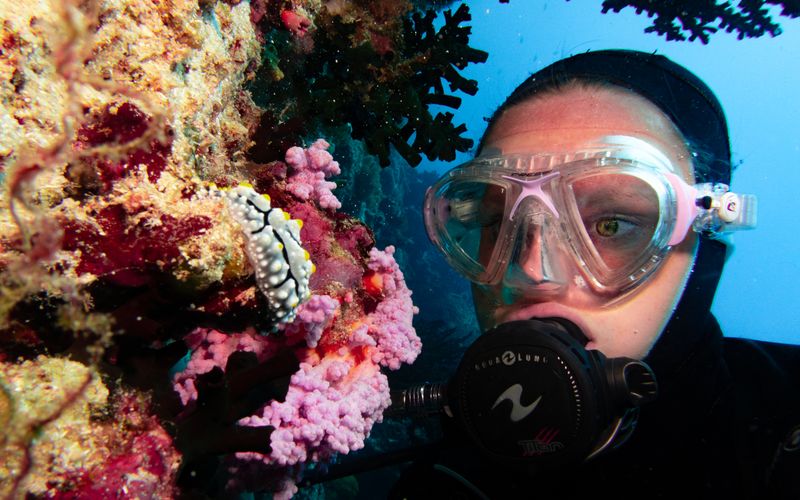
The short answer: more than you expect. The coral gardens off Jeddah's coastline host over 1,200 species of fish and 300 species of hard coral. That's not a marketing number. Marine biologists have been cataloguing the Saudi Red Sea coast for years, and the biodiversity consistently surprises researchers who are used to more heavily trafficked dive destinations.
On a typical dive in the Jeddah area you might see grouper, lionfish, moray eels, and schools of fusiliers moving in dense formation through the coral channels. Reef sharks are around, mostly whitetip and blacktip species, and they're far more interested in the fish than in you. Turtles are common at several sites and notably unbothered by divers, which makes for some unhurried encounters at close range. Napoleonfish patrol certain reef edges looking enormous and slightly bored, as they always do.
At deeper sites, you'll find fan corals and table corals that have been growing for decades. The colours are extraordinary in the first 15 metres where sunlight still reaches the reef directly. Below that, everything shifts towards the blue end of the spectrum, but torch light reveals the reds and oranges that sit dormant in the coral until illuminated.
Top Dive Sites Near Jeddah
The coastline north and south of Jeddah has a handful of standout sites that local operators return to again and again.
- Abu Madafi: One of the most popular sites north of the city, with a hard coral garden that starts in the shallows and descends to around 25 metres. Good for beginners because of the gradual slope and the density of marine life even at the shallow end. Morays, lionfish, and the occasional octopus tucked into coral crevices.
- Paradise Reef: A sprawling reef system with multiple navigation options depending on depth preference. The outer edge drops quickly and draws pelagics, while the inner sections suit less experienced divers. Visibility here is consistently excellent.
- The Caves (Al Ghar): A site for intermediate divers who want to navigate through shallow swim-throughs and natural coral archways. The cave entrances are wide and well-lit, so it's not technical diving, but it adds a dimension that flat reef dives don't offer.
- Obhur Creek: Closer to the city, this protected inlet is ideal for night dives and training dives. The shallow depth and calm conditions make it the go-to for dive courses and for anyone who wants a gentle reintroduction after time out of the water.
- Farasan Banks: For divers willing to travel further south, the Farasan Banks near Jizan offer some of the most pristine reef diving in the entire Red Sea. Hammerhead sharks and whale sharks are documented here seasonally. If you've got the time, it's worth the journey.

Scuba Diving vs Snorkelling: Picking the Right Option
If you're already certified, the choice is easy. The best of what the Red Sea offers is below 5 metres, and scuba diving gets you into the heart of the reef in a way that snorkelling simply can't match. A guided Red Sea scuba diving session takes you to depths where the coral architecture is most impressive and the marine life is most concentrated.
That said, snorkelling off Jeddah is genuinely good and shouldn't be dismissed. The reef tops in several areas come within a metre or two of the surface, and the clarity of the water means you can see down to 10 or 15 metres from the surface on a flat, sunny day. If you're travelling with a mixed group where not everyone dives, a Red Sea snorkelling experience lets everyone share the same location while certified divers drop to the deeper sections.
For people who've never dived before, most Jeddah operators offer discovery dive sessions that let you breathe underwater under direct supervision with no certification required. These sessions take place in 5 to 6 metres of water at sheltered sites and are a genuinely low-pressure way to find out if diving is for you. Many people who booked a single discovery dive end up enrolling in a full Open Water course the following week.
Getting Your Dive Certification in Jeddah
Jeddah has a well-established dive training scene. PADI Open Water courses are the most common entry point, typically running over three to four days and covering pool sessions, classroom theory, and four open-water qualification dives in the Red Sea itself. That last part is worth highlighting: your qualifying dives happen in actual Red Sea conditions, not a quarry or a municipal swimming pool. You come out certified and already experienced in warm, clear, high-visibility water.
Advanced Open Water courses build on that foundation, taking you to 30 metres and introducing navigation and night diving as specialties. The Red Sea night dive experience is remarkable. Coral that looks static during the day comes alive after dark, with feeding behaviour, bioluminescence, and reef creatures that only emerge after sunset.
Nitrox certifications are popular in Jeddah because the enriched air mixture extends bottom time and reduces nitrogen loading, which matters when you're doing two or three dives a day at deeper sites. Most serious dive operators in the city now carry Nitrox as standard.
What to Expect When You Book
Booking a water sports activity in Jeddah through SaudiActivities is straightforward. Most dive operators offer full equipment rental, so you don't need to travel with your own gear unless you prefer your own mask and wetsuit. Boats typically leave from the Obhur Creek area north of the city or from the Jeddah marina district, and the ride to most sites is under an hour.
A typical two-tank boat dive day looks like this: early morning pickup or self-drive to the marina, equipment check and briefing, 40-minute boat ride to the first site, first dive (45 to 60 minutes depending on depth and air consumption), surface interval with snacks and water on the boat, second dive at a nearby site, return to the marina by early afternoon. Lunch and coffee are usually included for full-day bookings.
Dive guides in Jeddah are generally excellent, which matters more than it might seem. Local knowledge of the reef layout, the best entry points, where the turtles hang out, and which sections of reef are worth spending extra time on makes a real difference to the quality of a dive. An experienced Jeddah dive guide adds dimension to the experience that a generic briefing never could.
Combining Diving With Other Jeddah Water Sports
The Red Sea coastline around Jeddah isn't just a dive destination. If you want to extend a water-focused trip, there's a full range of activities to build around your diving days. Sunset yacht cruises along the Corniche offer a relaxed evening on the water after a day of diving. Red Sea kitesurfing is popular in the north Jeddah area where consistent onshore winds make conditions ideal for learning. Mangrove kayaking through the protected creek systems north of the city is a calm, wildlife-focused contrast to the adrenaline of open-water diving.
For families or groups where diving isn't on everyone's agenda, a glass-bottom boat tour covers a lot of the same coral ground without anyone needing to get wet. It's a genuinely good experience for young children and for anyone who wants a preview of the reef before committing to a dive course.
Best Time to Dive the Red Sea Near Jeddah
The honest answer is that the Red Sea near Jeddah is diveable year-round. Water temperatures never drop below 22 degrees Celsius, and the sea state is generally calm. That said, there are meaningful differences between seasons.
October through April is the most comfortable period for most divers. Air temperatures are pleasant, the water is warm but not hot, and visibility tends to be excellent as surface algae growth slows down in the cooler months. January and February can bring occasional choppy surface conditions from northerly winds, but sites south of Jeddah remain sheltered even when the north coast is rough.
June through August is hot. Air temperatures above 40 degrees Celsius and water temperatures up to 30 degrees mean you'll want to minimise time on the boat surface between dives. Visibility can reduce slightly as plankton blooms in the warmer water. That said, warmer water brings certain fish species closer to shore, and whale sharks pass through the southern Saudi coast in summer months. If whale shark encounters are on your list, the summer season is worth the heat.
Visibility after rainfall can drop temporarily as runoff affects the shallow sites closest to the coast. It recovers quickly, usually within a day or two, but it's worth checking conditions before heading out after unusual weather.
Practical Tips Before You Go
- Certification cards: Bring your dive certification card. All reputable operators will ask to see it before putting you on a boat. A photo on your phone is usually accepted if you've misplaced the physical card.
- Reef-safe sunscreen: Standard sunscreens are damaging to coral. Most Jeddah operators now require reef-safe products and provide them if you don't have your own. It's worth buying a tube before you travel.
- Hydration: Diving in warm water dehydrates you faster than you'd expect. Drink water consistently on the boat, not just when you feel thirsty. Avoid alcohol the evening before a full dive day.
- Log book: Bring your dive log book if you have one. Guides can sign off your dives, and keeping accurate records matters if you're working towards advanced certifications.
- Camera: An underwater camera or GoPro will capture things you genuinely won't believe afterwards. The coral colours and fish density in the Red Sea photograph better than almost anywhere on earth.
The Red Sea off Jeddah is one of those dive destinations that delivers more than the expectations set for it. Whether you're a beginner looking for your first underwater breath or an experienced diver ticking off another world-class reef, the Saudi coastline has something that will make the trip worthwhile. Browse the full range of water sports activities in Jeddah and book your dive today.