Does Timing Actually Matter This Much?
Short answer: yes, enormously. Saudi Arabia is a country of wild extremes. In summer the Riyadh desert can hit 48 degrees Celsius. In winter, the highlands of Asir dip to 4 or 5 degrees at night and the mountains near Tabuk can see frost. Plan around the weather and you'll have one of the best outdoor trip experiences of your life. Ignore it and you might find yourself trying to enjoy a sunrise hike at 7 AM when it's already 38 degrees and rising.
The good news is that Saudi Arabia is big enough, and varied enough geographically, that there's always somewhere excellent to be. The Red Sea coast is delightful almost year-round for diving and water sports. The highlands of Abha and Asir are at their most green and dramatic during the summer monsoon season. The desert is magical from October through April. Get the timing right for your chosen activities and Saudi Arabia delivers something genuinely extraordinary.
This is your honest, no-fluff guide to every month, every region, and every activity, so you can plan exactly the trip you want.
October to December: The Desert Wakes Up
This is, for most outdoor adventure activities, the single best window of the year to visit Saudi Arabia. Temperatures in Riyadh drop from the punishing summer highs to a genuinely comfortable 20 to 30 degrees Celsius during the day. Nights cool down to 12 to 18 degrees. The desert air is clear, the light is extraordinary, and the whole country seems to exhale after the summer heat.
October is when the desert activities kick back into full swing. Dune bashing operators who scaled back over summer reopen their best routes. Quad biking sessions that were limited to early morning now run all day. Desert safari camps fire up their kitchens and start laying out carpets under the stars again.
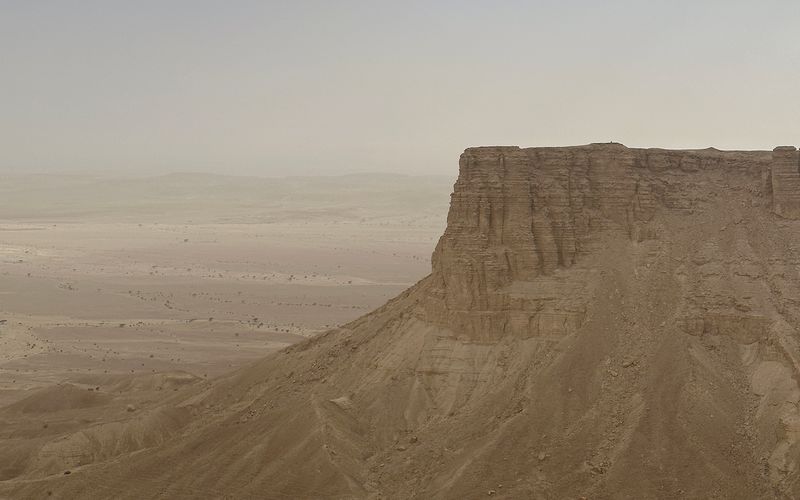
If an Edge of the World hike is on your list, October through December is ideal. The hike covers 3 km over rocky terrain on the Tuwaiq Escarpment, and doing it in comfortable temperatures rather than the summer heat is a completely different experience. You'll actually be able to stand at the cliff edge and appreciate the 300-metre drop into the desert below instead of sprinting back to the shade.
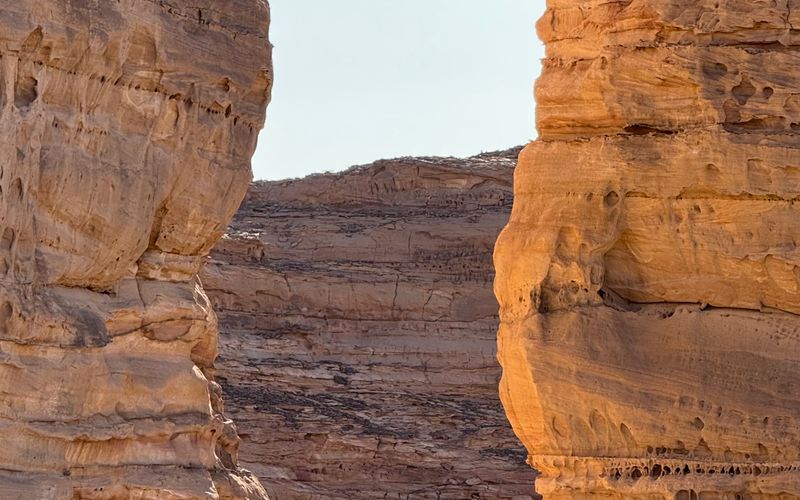
AlUla becomes absolutely magical from late October. The sandstone formations glow amber in the softer autumn light. Temperatures at the archaeological sites sit around 22 to 27 degrees, which is perfect for exploring Hegra's Nabataean tombs or taking an AlUla hot air balloon at sunrise. The balloon flights above the rock formations in this season are genuinely otherworldly.
The Red Sea is still warm in October and November, around 27 to 29 degrees, making it excellent for scuba diving and snorkelling. Visibility is typically exceptional at 20 to 30 metres in Jeddah's offshore reefs. Book early for November and December, because every operator you'll want fills up fast as Saudi and expat residents emerge from summer hibernation.
Pro tip: Book desert activities for the October and November period at least 3 weeks in advance. This is when the whole country decides it's finally time to get outdoors, and the best operators fill up quickly. Friday and Saturday slots go first, but Tuesday and Wednesday bookings in this period are surprisingly easy to secure.
January and February: The Golden Months
If you can only come to Saudi Arabia once and you want to do everything, come in January or February. These are almost universally considered the best months for outdoor activity across the whole country. Temperatures are perfect: 18 to 26 degrees in Riyadh and the central region during the day, cool and comfortable at night without being cold. The skies are reliably clear. Humidity is low. The light has that quality that photographers travel thousands of kilometres to chase.
Every outdoor activity is at its best right now. Desert camping is incredible; sleeping under Saudi skies in 14-degree overnight temperatures wrapped in blankets feels like exactly what camping is supposed to feel like. AlUla experiences, from camel caravans to rock climbing and stargazing, are running at peak quality. The Wadi Disah canyon hike near Tabuk, Saudi's version of the Grand Canyon, is absolutely spectacular in January light.
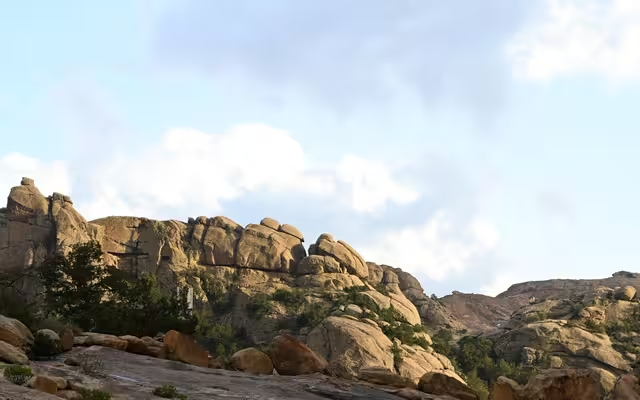
In the Asir highlands around Abha, January and February bring crisp mountain air and clear views. The Asir mountain hiking trails through the juniper cloud forests are stunning in this season. Morning mist clings to the valleys before burning off to reveal panoramic views across the terraced hillsides. If paragliding in Abha is something you want to do, January and February give you the most reliable thermals and the clearest views from altitude.
Scuba diving and snorkelling on the Red Sea remain excellent, though water temperatures drop slightly to around 24 to 26 degrees. Still perfectly comfortable in a 3mm wetsuit, and visibility often peaks in winter at some sites. The NEOM coastal diving is spectacular in this period for those willing to make the journey north to Tabuk.
I still remember a February morning in the desert outside Riyadh where the temperature was 19 degrees at 9 AM and the light was so golden and clear that every photograph looked like a professional shot it. You just cannot get that in July. January and February are the months when everything comes together.
March and April: Spring in the Desert
Spring arrives with warmth creeping back in but not yet the oppressive summer heat. Riyadh temperatures climb from 25 degrees in March to 35 degrees by mid-April, which is still entirely manageable for outdoor activities if you plan around the midday sun. Early morning sessions and late afternoon golden-hour activities are the way to go in April.
March is particularly special for a specific Saudi experience: Taif's rose season. From early March through May, the entire city of Taif transforms into a blaze of pink and red as the famous Taif roses bloom. The scent is extraordinary. Rose farms open to visitors, rose water distilleries run tours, and the whole Hejaz mountain region around Taif feels like a different country entirely from the desert below. The Taif rose garden and cable car experience is genuinely something you won't find anywhere else on earth.
For water sports around Jeddah, March and April are excellent. The Red Sea temperature hits a lovely 26 to 28 degrees by April. Winds are calmer than summer months, making conditions ideal for snorkelling, paddleboarding, and yacht cruises. Half Moon Bay near Dammam comes alive in spring as families from the Eastern Province head to the coast for the season.
AlUla's last good window before summer heat arrives is March. If you're heading there, plan your Hegra visits and desert activities for morning hours and save the afternoons for the cool shade of the old town or your hotel. By April the daytime temperatures in AlUla can hit 38 degrees, which makes outdoor archaeology tours uncomfortable rather than magical.
Pro tip: If you're visiting in spring and the temperatures start climbing, time your hardest outdoor activities for 7 AM to 10 AM. The desert in the early morning in April is magical: cool air, low-angled light, and the whole landscape feeling fresh and alive. By noon it is a different proposition entirely.
May and June: Transitioning to Heat
This is when the desert becomes genuinely challenging for most outdoor activities. Riyadh can hit 40 to 43 degrees Celsius by June. Most desert hiking and land-based activities are only comfortable if scheduled before 8 AM or after 5 PM. You're not going to enjoy a leisurely hike to the Edge of the World at 2 PM in June. Nobody is.
The exceptions are compelling, though. The Red Sea coast becomes the place to be for water sports. Jeddah's coastal waters are perfect at 29 to 31 degrees, and activities like jet skiing, parasailing, and paddleboarding in the warm Red Sea are actually better in May and June than any other time of year. Scuba diving at depth remains comfortable regardless of surface temperature. The underwater world doesn't care that it's hot above.
Abha and the Asir highlands are worth serious consideration in May and June. The highlands sit at 2,200 to 2,800 metres above sea level. While the rest of Saudi Arabia swelters, Abha hovers around a lovely 22 to 28 degrees during the day. This is when the region starts to receive its monsoon season rains, and the hills turn an impossibly vivid green. Walking through green mountain terraces in what is technically Saudi Arabia feels genuinely surreal. The Asir cloud forest walk in June, with morning mist curling through the juniper trees, is one of the most unexpected experiences the whole country offers.
Kitesurfing conditions along the Red Sea near Jeddah actually peak in summer months, when the reliable thermal winds pick up consistently from May through September. If you're a kiteboarder, this is your season.
July and August: Abha Is Your Friend
Let's be honest about July and August in Riyadh and Jeddah. It is very, very hot. We're talking 44 to 48 degrees Celsius in Riyadh on regular days. The humidity in Jeddah makes even that seem moderate. Most land-based outdoor activities are not enjoyable in these conditions unless you have a high tolerance for extreme heat and plan around very early morning slots.
That said, Saudi Arabia does not shut down in summer. It redirects.
The Asir highlands and Abha are the primary domestic summer destinations for a reason. Temperatures hold at 22 to 27 degrees during the day and can drop to 15 degrees overnight. The Khareef season (monsoon) arrives fully by July, bringing regular afternoon rain that keeps everything lush and green. Hiking the trails around Abha in July feels like being in a completely different country from the desert you drove through to get there.
Red Sea water sports remain popular year-round among those who don't mind the surface heat. Early morning sessions starting at 6 AM before temperatures spike are genuinely pleasant. Jet skiing in Jeddah at 7 AM on a clear summer morning with calm seas and warm water is not a bad way to start the day, even if it sounds counterintuitive.
Farasan Islands in the summer months offer an interesting option for serious divers. The islands themselves are quieter, and the cooler deep-water sites offer some of the country's most pristine coral formations. Not for casual tourists, but for experienced divers it can be a remarkable experience.
September: The Shift Begins
September is a transitional month that's underrated. By mid-September temperatures in Riyadh start dropping noticeably from their August peaks. They're still hot, 35 to 40 degrees Celsius, but the brutal edge of peak summer is gone. Evening temperatures become genuinely pleasant, sitting around 22 to 25 degrees after sunset.
This is when stargazing experiences start to become incredible again. The nights in the desert in September, far from city lights, are exceptional. The Milky Way arches over the Saudi desert in a way that will absolutely stop you in your tracks. If you want to book a desert stargazing experience, September and October represent the best combination of warm comfortable nights and clear skies before winter clouds arrive occasionally in November and December.
Water sports on the Red Sea in September are still running at full capacity, with water temperatures around 30 to 32 degrees. The coral is active, the visibility is excellent, and the crowds are slightly thinner than the peak winter season. If you want a quality Red Sea diving or snorkelling experience without competing with everyone else for boats and slots, early September is a genuinely smart choice.
Pro tip: September through mid-October is a sweet spot that serious travellers know about but most tourists miss. Desert experiences start reopening but bookings haven't picked up yet. You can often get same-week or even same-day slots that would be impossible to book in November or February. If your schedule is flexible, consider this window.
A Quick Activity-by-Activity Breakdown
Different activities have different ideal seasons. Here's the quick reference version.
Desert hiking and Edge of the World: October through April. Peak: January and February. Avoid: June through September unless you go at dawn.
Dune bashing and quad biking: October through April. Peak: November through March. Still possible in May and June with early morning starts.
Scuba diving and snorkelling in the Red Sea: Year-round. Best visibility: November through April. Warmest water: June through September.
Water sports (jet skiing, parasailing, paddleboarding): Year-round. Best overall experience: October through May. Kitesurfing peak: June through September for consistent wind.
AlUla heritage and outdoor activities: October through March only. The heat makes April through September genuinely uncomfortable here.
Abha and Asir mountain activities: Year-round. Best for greenery and mist: June through September. Best for clear views and hiking: October through March.
Hot air balloon (Riyadh and AlUla): October through March. Flights operate year-round but summer conditions can ground balloons due to heat and wind changes.
Stargazing in the desert: September through April. Peak: January and February for the longest clear nights.
Paragliding in Abha: Year-round, with the best thermals and clearest views from October through February.
Special Events and Times to Consider
Saudi Arabia's events calendar also affects when outdoor activities feel most vibrant and alive.
The AlUla Winter at Tantora Festival runs from late December through March and coincides with peak outdoor conditions at AlUla. Concerts, art installations, and food experiences sit alongside the desert adventures. The whole region buzzes with energy during this period and the atmosphere is genuinely electric.
Ramadan shifts each year but falls in different seasons. Many outdoor operators maintain reduced hours during Ramadan, with activities starting after Iftar in the evening rather than during the day. Evening desert dinners and late-night stargazing during Ramadan actually have a special, contemplative quality that's quite different from any other time of year.
Saudi National Day falls on September 23rd and the whole country celebrates. Cities and desert camps are full. If you're there at that time, book well in advance. The atmosphere is wonderful, but availability is tight.
The Red Sea International Film Festival in Jeddah (usually November or December) brings a creative energy to the city that makes it an unusually interesting time to be there alongside water sports and heritage tours.
How to Book Your Activities at the Right Time
SaudiActivities.com lists availability in real time for all the experiences mentioned in this guide. Whether you're planning an AlUla balloon flight for January or a Red Sea dive in November, you can check dates, prices, and book directly on the site.
If you want a personalised recommendation based on your travel dates and interests, WhatsApp us directly. Tell us when you're coming, where you're staying, and what kind of experience you're after, and we'll match you to exactly the right activity with the best operator for those specific conditions. We've been doing this long enough to know which operators run their best experiences in which seasons, and that knowledge is worth sharing.
Saudi Arabia rewards the traveller who plans well. Come in the right season for your activities, book the right operators, and you will have an outdoor adventure that you genuinely struggle to describe to people who haven't been. That's not hype. That is simply what this country delivers when everything lines up correctly. You will not regret getting the timing right.
Ready to plan your trip? Browse all outdoor activities on SaudiActivities.com →