Why a Helicopter Tour of Saudi Arabia Is Completely Unlike Anything Else
There's a particular moment on every helicopter tour that nobody warns you about. You've cleared the ground, you're climbing through 200 metres, and then the landscape just opens up. What looked like a series of rock formations from road level is suddenly revealed as an entire geological story. Ancient trade routes become visible as faint lines in the gravel. A canyon you walked through yesterday looks impossibly deep from above. The scale of everything shifts, and it doesn't really shift back.
Saudi Arabia is one of the few places in the world where a helicopter tour delivers that shift in almost every direction you look. The country has extraordinary geological diversity compressed into a relatively accessible territory. In AlUla, you're flying over 2,000-year-old Nabataean tombs cut into sandstone that was ancient before the tombs were carved. Over Riyadh, you're watching a city of eight million people dissolve into the empty Najd desert in under ten minutes of flight. Along the Red Sea coast, the reef systems visible through the clear water are some of the most biodiverse in the world. None of this translates properly from the ground. From a helicopter, it lands.
This guide covers the main helicopter tour options across Saudi Arabia, what to expect from each one, how to choose the right experience for your trip, and what the practical booking process looks like. It's long because the subject deserves it. Saudi helicopter tourism has expanded considerably since 2019, and the options are more varied than most visitors realise.
AlUla: The Helicopter Tour That Most People Talk About
If you ask people who've done helicopter tours across Saudi Arabia which one stayed with them, AlUla comes up more often than anywhere else. There's a reason for that. The sandstone landscape around AlUla is extraordinary from any angle, but the aerial perspective reveals something that ground-level visits simply can't communicate: the relationship between the ancient Nabataean sites and the wider geology that created the conditions for them.
The Nabataeans chose AlUla's valley precisely because it was a natural waypoint on the incense trade route from Yemen to the Mediterranean. From the helicopter, you can see that. The valley floor cuts through the sandstone plateau in a way that would have been unmissable to caravan leaders navigating by landmarks. The 111 rock-cut tombs at Hegra, which look grand and isolated from ground level, appear from the air as part of a wider pattern of human settlement across the entire valley. That context is genuinely hard to get any other way.
The standard AlUla helicopter tour runs for 30 to 40 minutes and covers the main sites: Hegra, Elephant Rock, the old town of AlUla, the ancient oasis gardens, and the Al Khuraybah site. Routes vary depending on wind and flight conditions, but pilots are experienced at finding the angles that make each site most impressive from above. The whole valley comes alive in a way that even a full day of ground-level tours doesn't fully replicate.
Early morning flights are the preferred option. The low sun angle in the first hour after sunrise creates shadows that define the sandstone formations dramatically. Cliff faces that look flat in midday light become sculpted and dimensional at dawn. Booking the first flight slot of the day is worth the early alarm call, and the post-flight breakfast that most operators include tastes significantly better after you've just spent 40 minutes watching the valley turn gold from 300 metres up.
AlUla helicopter tours run as private charters with capacity for up to four passengers in a standard configuration. Prices start from SAR 2,500 per flight rather than per person, which makes the per-head cost more reasonable for groups or couples. The AlUla hot air balloon is the obvious comparison activity, and some visitors choose to combine both on consecutive mornings. The balloon gives you a slower, more contemplative aerial experience and operates at greater altitude. The helicopter lets you navigate to specific sites and get closer to the formations. They're genuinely complementary rather than interchangeable, and the visitors who do both consistently say the perspective from each is different enough to justify the investment.

Riyadh: Seeing the Capital From the Air
Riyadh from a helicopter looks like something a city planner drew on graph paper and then someone else went and built without reading the instructions. The grid of the modern city is absolute, then suddenly interrupted by desert, then resumed again twenty kilometres further out. It's an extraordinary piece of urban geography, and the helicopter makes the whole pattern legible in a way that neither driving through it nor looking at maps ever quite does.
The Riyadh aerial experience typically covers the Kingdom Centre Tower (the distinctive inverted arch that defines the skyline), the old diplomatic quarter, the Al Faisaliah tower, and the boundary where the city meets the Najd desert. On clear days the visibility stretches to the Tuwaiq Escarpment, the dramatic limestone cliff edge that marks the western boundary of the Riyadh plateau. That escarpment, which you'd need a 90-minute drive to reach on the ground, appears as a clear geological feature in the distance about fifteen minutes into a Riyadh helicopter flight.
Evening flights over Riyadh are worth considering alongside the standard morning option. The city at dusk and after dark has a particular visual quality. The lighting of the Kingdom Centre's arch, the spread of headlights across the highway grid, and the way the lit towers define the skyline against the dark desert to the south make for photography that's genuinely different from the daytime experience. If you've already done the Kingdom Centre Sky Bridge visit and seen the city from the top of the tower, the helicopter offers the inverse view: the tower from above and the city arranged around it.
Riyadh helicopter tours also work well as part of a desert-focused day. Some operators offer combined programmes where you fly over the Tuwaiq Escarpment and the desert terrain south of the city in the morning, then land near the dune area for a quad biking session before returning to the city. This combination gives you two completely different relationships with the same landscape: the vast aerial overview followed by the ground-level, physical, dusty reality of actually riding across it.
What You'll Actually See: Site by Site
Different helicopter routes emphasise different things, and it's worth knowing what to look out for before you fly rather than spending the flight trying to figure out what you're seeing in real time.
In AlUla, the four main visual highlights are the tomb facades at Hegra (best from the northeast, where the light catches the carvings in the morning), Elephant Rock (genuinely more impressive from above than from ground level, where the rock formation is harder to read as a whole), the ancient oasis terracing along the wadi floor (visible as a patchwork of green against ochre rock), and the old town of AlUla itself, where the mud-brick architecture is clustered together in a way that's only obvious from the air.
In Riyadh, watch for the moment the grid ends and the desert begins, which happens abruptly on all sides of the city. The Tuwaiq Escarpment is identifiable from distance as a long, dark horizontal line to the southwest. The Kingdom Centre tower's arch frames differently from every altitude during ascent. The highway interchanges, which are purely functional from ground level, look oddly beautiful from 400 metres as geometric forms in the landscape.
Along the Red Sea coast, the reef systems are the main event. From altitude on a calm day, the coral gardens appear as dark patches against bright turquoise, the deeper water shifts to cobalt blue, and the boundary between reef and open sea is a sharp colour transition. Turtle and ray sightings are not guaranteed but not uncommon, particularly in the morning when visibility through the water surface is best. The contrast between the desert landscape coming to the coast and the ocean beginning is one of the more dramatic things visible from a helicopter in the entire country.
Helicopter Tours vs Hot Air Balloons: Which One Is Right for You?
This is the question most people ask when planning aerial activities in Saudi Arabia, and the honest answer is that they're very different experiences rather than one being better than the other.
A hot air balloon gives you altitude, silence, and a panoramic perspective at slow drift speed. You're floating with the wind, not navigating to specific points of interest. The experience is contemplative, unhurried, and gives you time to absorb a wide view. The AlUla hot air balloon typically reaches 400 to 600 metres, which is significantly higher than most helicopter tours, and the 360-degree view from that altitude is genuinely spectacular. But you go where the wind takes you, which is also part of the appeal.
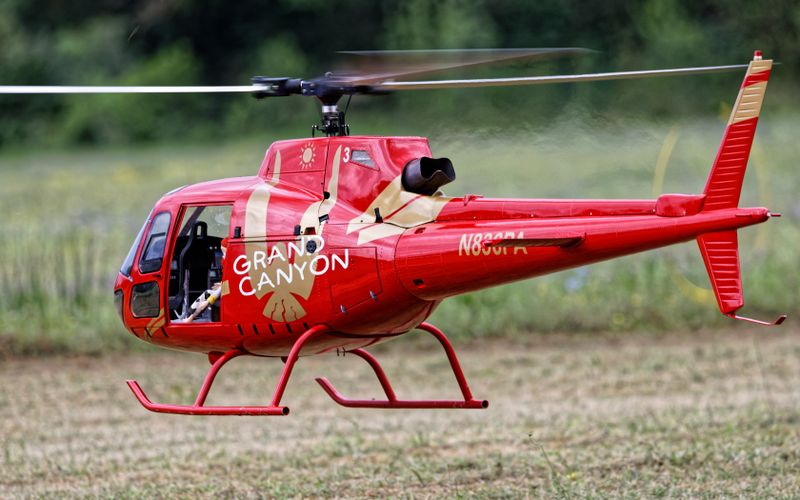
A helicopter lets you navigate. Your pilot can take you close to specific formations, change altitude to show you different features, hover at viewpoints, and adjust the route based on what's interesting that day. It's faster, louder, and more dynamic. The vibration through the airframe is part of the sensory experience. You can cover more ground in 40 minutes of helicopter flight than a balloon covers in an hour, and you can direct the attention of the flight in a way that balloon passengers can't.
For AlUla specifically, the helicopter suits people who want to see specific archaeological sites from above. The balloon suits people who want the broader landscape experience and the silence. If you have the time and the budget, doing both on consecutive days is one of the best activity combinations available in Saudi Arabia.
Paragliding as an Aerial Alternative
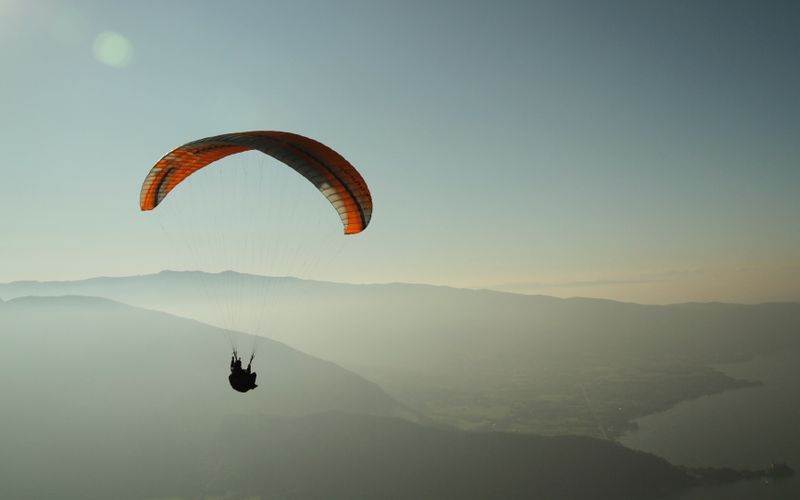
If you're in the Abha and Asir region rather than AlUla or Riyadh, the tandem paragliding experience from the Asir highlands offers an aerial perspective that's different again from both the helicopter and the balloon. You're launched from a ridge at around 2,400 metres with a certified tandem pilot, and you soar above cloud forests and the dramatic escarpment edge that drops toward the Tihama plain.
Paragliding doesn't have the navigational flexibility of a helicopter or the altitude of a balloon, but it has something neither of those offers: the sensation of flight without an enclosure. You're hanging in a harness in open air, able to feel the thermal lift as it carries you, turning with the wing, watching the landscape change angle beneath you. For some people this is the most visceral and memorable aerial experience available. For others the openness is too much, and the enclosed safety of a helicopter basket is more appealing. Both positions are completely reasonable.
The mountain landscape around Abha is genuinely different from the desert landscapes of AlUla and Riyadh. Green highlands, terraced village slopes, juniper forest, and the escarpment cliffs creating the vertical drama that makes paragliding here so impressive. If your Saudi Arabia itinerary includes Abha, pairing an early morning Asir mountain hike with an afternoon tandem paraglide gives you the same landscape from two perspectives in a single day.
Practical Information: Booking, Safety, and What to Expect
Helicopter tourism in Saudi Arabia operates under Saudi General Aviation Authority regulations. All commercial charter operators are licensed and aircraft are maintained to international standards. Safety records in the Saudi tourism helicopter sector are good, and operators with established track records in AlUla and Riyadh have been flying tourists since the early days of Vision 2030 tourism development. That's relevant context, because it means the operational systems are mature. These aren't improvised operations.
Most helicopter tours seat four passengers in the main cabin with a pilot. If you're travelling as a couple, you may share the flight with another couple or pay a single-party premium for the full aircraft. Families with children can usually be accommodated, with minimum age requirements typically set at five years old and minimum weight requirements on smaller aircraft. Check with the operator when booking if you're travelling with young children.
What to wear: nothing elaborate. Comfortable clothing, sunglasses, and shoes you can step easily from a low aircraft step in. Some landing areas at sites like Hegra involve walking briefly on sandy terrain, so trainers or light shoes work better than sandals. Leave loose scarves and unsecured hats on the ground. The rotor downwash during boarding and disembarking is forceful enough to remove light items from heads and necks with surprising efficiency.
Photography: your phone or compact camera will perform well in a helicopter. The main challenge is vibration and window glare. Sit the camera against the window frame to minimise vibration transfer rather than holding it free in the air. Use a faster shutter speed than you normally would, even in good light. If the window opens on your side (some aircraft allow this), remove the glass entirely for photography, but confirm this is permitted with your pilot before the flight rather than discovering mid-air that it's not.
Weather cancellations happen. Sandstorms in spring and occasional low visibility from heat haze in summer can ground flights. Operators generally reschedule cancelled flights at no charge and will contact you the morning of the flight if conditions are marginal. If you're on a tight itinerary and the helicopter tour is a priority, book it early in your visit to give yourself rescheduling room.
Combining Aerial Activities With a Broader Saudi Itinerary
The most effective way to use helicopter tours is as a complement to ground-level activities rather than a standalone experience. The aerial perspective makes subsequent ground visits richer because you understand the spatial context of what you're looking at. Doing the helicopter first and the Hegra tour second gives you a mental map that the ground guide can populate with detail. Doing the ground tour first and the helicopter second confirms and expands what you already know from eye level.
In Riyadh, the helicopter pairs naturally with the Edge of the World hike. Flying over the Tuwaiq Escarpment from 300 metres and then standing on it at ground level a day later gives you an understanding of the scale that neither experience alone provides. The cliffs that look like a long dark line from the air become overwhelming vertical faces at ground level. The vast desert visible from the escarpment edge has already been comprehended from above. Both experiences land differently for having the other.
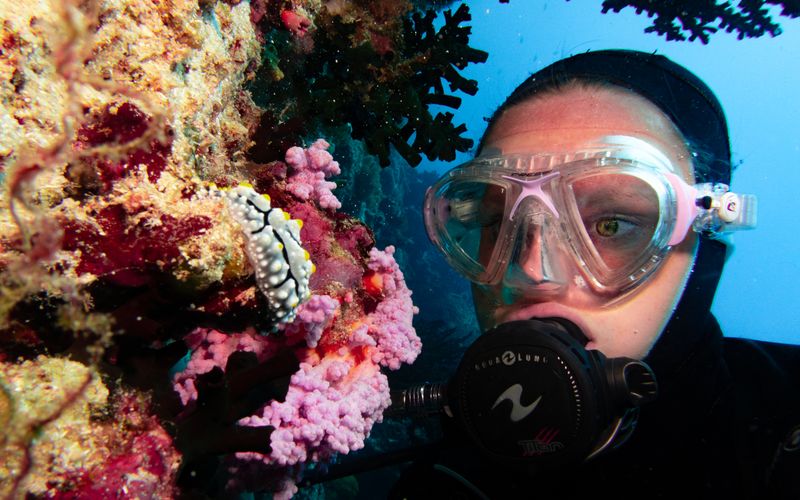
Along the Red Sea coast, the helicopter over the reef systems followed by a scuba diving session on those same reefs is the optimal sequence. You've seen the reef layout and extent from above. You know where the deeper water is. When the dive boat takes you to the site you flew over, the spatial orientation is already there. The underwater world then adds the close-up biological detail that the aerial view can't provide.
AlUla Helicopter Costs and Booking Process
AlUla helicopter tours are priced per flight rather than per person, which changes the economics depending on group size. A 30-minute private charter in AlUla typically runs SAR 2,000 to 2,500. A 40 to 45 minute extended route covering more sites is SAR 2,800 to 3,200. For two people, these prices put the experience in the same bracket as a well-priced London dinner. For four people, the per-head cost is comparable to a mid-range activity in any international tourist destination.
Booking through a consolidated platform like SaudiActivities means you're booking through an operator that's already been assessed for reliability and safety standards. It also means a single WhatsApp contact point for confirmation, changes, and questions rather than navigating multiple operator websites. For multi-day AlUla itineraries that include multiple activities, the convenience of a single booking interface across helicopter, Hegra tour, and other experiences is meaningful in practice.
The booking confirmation process for helicopter tours typically includes a pre-flight passenger weight form, which is standard for weight and balance calculations on light aircraft. Fill this in accurately. The weight limit per passenger on most Saudi charter helicopters is 120 kg. If this is a concern, mention it when booking and the operator will advise on appropriate aircraft.
Who Gets the Most Out of a Helicopter Tour
Genuinely, most people. The aerial perspective adds something that isn't available from ground level, and it doesn't require any physical fitness, prior experience, or specialist knowledge. It's accessible in a way that hiking and diving aren't, and the experience is engaging enough to hold the attention of travellers who aren't particularly interested in outdoor activities.
Photography-focused travellers get more from a helicopter tour than from almost any other single activity. The image quality achievable with a modern phone camera from a helicopter at low altitude in good Saudi light is genuinely exceptional. If landscape photography is part of why you're travelling, a helicopter flight over AlUla or the Red Sea coast will produce the images that define the trip.
First-time Saudi Arabia visitors benefit enormously from the context a helicopter provides. The size and variety of the country is hard to understand from the ground, and the aerial view compresses the geography into something comprehensible. After a 40-minute helicopter flight over any significant part of Saudi Arabia, visitors consistently report understanding the country differently. That changed understanding makes subsequent ground activities more meaningful.
Repeat visitors who've done the main ground-level activities and want a new perspective also find the helicopter delivers. If you've walked through Hegra twice and want to see it in a way you haven't seen it before, the aerial view is the answer. The formations and sites you already know from ground level reveal new features from above. It doesn't become familiar. It becomes more interesting.
Browse the full range of aerial adventures in Saudi Arabia, including helicopter tours, hot air balloons, paragliding, and parasailing. All activities on SaudiActivities include verified operators, WhatsApp booking confirmation, and where available, hotel pickup. Your flight briefing is waiting.